
Can Dogs Have Rib Bones: Safely Chew On Ribeye Steak Bone Tasty Treat Or Health Hazard
It is 7 PM on a Saturday. The grill is smoking, the smell of BBQ sauce is in the air, and you just sat down with a rack of perfect ribs. You take the first bite—tender, smoky, amazing—and then you feel it. The stare. Your dog is vibrating with anticipation, giving you the look that says, “If you loved me, you would share.” Your hand moves toward the plate. Stop. Before you hand over that rib bone, you need to read this. The answer is not a simple yes or no. It is one of the most dangerous questions a dog owner can ask.

Key Takeaways
- Cooked rib bones of ANY kind are NEVER safe. Cooking dehydrates the bone, making it brittle and prone to splintering into sharp shards that act like needles in the gut.
- Raw rib bones are “less bad” but still high-risk. They carry dangerous bacteria (Salmonella, E. coli) and can still crack teeth or cause obstructions.
- The “Just One” myth is a trap. A single rib bone is all it takes to perforate the intestine. There is no safe quantity.
- Beef ribs are denser and more dangerous than pork ribs due to their weight-bearing structure, acting like glass when chewed.
- Pork ribs are high in fat, which can trigger pancreatitis, a painful and potentially fatal inflammation of the pancreas.
- There are safe alternatives. We will show you what to give them instead that satisfies the urge to chew without the ER visit.
Table of Contents
Can Dogs Have Rib Bones?
Let’s cut to the chase. The overwhelming consensus in the veterinary community, supported by organizations like the AVMA (American Veterinary Medical Association) and the FDA, is a resounding NO.
While the image of a dog gnawing on a bone is iconic, the modern reality of canine health tells a different story. Domestic dogs do not have the same digestive resilience or jaw mechanics as their wild ancestors. When you ask if dogs can have rib bones, you are really asking about three specific variables: Cooking state (raw vs. cooked), Animal source (pork vs. beef), and Bone structure (flat vs. round).
The general veterinary stance is simple: The risks far outweigh the perceived benefits. The “benefit” is 15 minutes of chewing entertainment. The risks include choking, shattered teeth, esophageal blockages, intestinal perforation, and sepsis. We are not talking about a minor tummy ache. We are talking about life-threatening emergencies.
Can I Give My Dog a Cooked Rib Bone?
No. Absolutely not. Not even a tiny piece.
If you take only one thing away from this article, let it be this: Cooking a bone changes its molecular structure.
A raw bone is living tissue. It contains collagen and moisture. This makes it slightly flexible, like a hard rubber eraser. It can bend a little under the pressure of a dog’s jaw without shattering.
When you cook a bone—whether you boil, bake, or grill it—you boil off that moisture and denature the collagen. The bone becomes dry and porous. It loses its flexibility. It becomes brittle.
Think of it like a fresh green twig versus a dead, dry twig. You can bend the green one, and it might crease. If you bend the dry one, it snaps. And it doesn’t just snap cleanly; it splinters.
When a dog crunches down on a cooked rib bone, it doesn’t just break into chunks. It explodes into microscopic, razor-sharp shards. These shards are like tiny needles. As your dog swallows, those needles scratch and pierce the esophagus, the stomach lining, and the intestines.


Cooked Rib Bones a Greater Risk?
Yes. They are exponentially more dangerous.
Many owners think, “Well, I give my dog chicken bones, and he’s fine.” Chicken bones are bad, but rib bones are worse. Why? Surface area and shape.
Rib bones are flat and curved. When they splinter, they don’t just create pointy tips; they create dagger-like shards. A round chicken bone might splinter into gravel-like pieces (still dangerous, but different). A rib bone splinters into long, sharp blades.
We interviewed a vet tech who wished to remain anonymous. She said: “I see at least one dog a week with a cooked rib bone obstruction. The X-rays are horrifying. You can see the bone fragments scattered through the gut like landmines. We have to go in and scoop them out. It’s bloody, it’s expensive, and half the time, the owner says, ‘I just gave him one leftover rib from dinner.’ One is all it takes.”
Why Cannot Dogs Have Cooked Beef Rib Bones?
If pork ribs are bad, beef ribs are the nuclear option.
Beef rib bones are incredibly dense. Cows are heavy animals, and their skeletons are built to support thousands of pounds. The bone density in a beef rib is much higher than in a pork rib or a chicken wing.
Here is the physics of it:
- Density = Rigidity. The bone does not give way.
- Dog Jaw Force = Immense Pressure. A large breed dog can exert 300-400 PSI of bite force.
- The Result. When an unstoppable force meets an immovable object, the object shatters.
Because the beef rib is so hard, it doesn’t just splinter into a few pieces. It shatters into a cloud of sharp fragments. Furthermore, beef ribs are often larger. A dog might try to swallow a chunk that is too big, leading to an obstruction right at the entrance of the stomach (the pylorus).
Reported cases of digestive tract damage from beef ribs are catastrophic. We aren’t talking about a little blood in the stool. We are talking about peritonitis—a bacterial infection of the abdominal cavity caused by gut contents leaking out through a perforated intestine. This is often fatal without emergency intervention.
Can Dogs Eat Rib Bones Cooked?
Let’s address the seasoning, too. You didn’t just boil that rib; you marinated it.
BBQ sauce, garlic powder, onion powder, and salt are all toxic or dangerous to dogs in concentrated amounts.
- Onion and Garlic: Contain thiosulfates that destroy red blood cells, leading to anemia.
- Salt: Can cause sodium ion poisoning, leading to seizures and dehydration.
- Sugar/Spices: Can trigger acute pancreatitis.
So, a cooked rib bone is a triple threat:
- Mechanical danger: It’s a sharp weapon.
- Toxic danger: It’s covered in poison.
- Fat danger: The marrow and meat trimmings are high-fat triggers for pancreatitis.
There is no scenario where a cooked rib bone from your plate is safe for your dog. Throw it in the trash. Bury it. Do not pass Go.
| Danger Factor | Cooked Rib Bone | Raw Rib Bone (Supervised) |
|---|---|---|
| Splintering Risk | EXTREME (Brittle glass-like shards) | LOW (Flexible, bends) |
| Tooth Fracture | HIGH | MEDIUM |
| Bacterial Risk | NONE | MEDIUM (Salmonella/E. coli) |
| Obstruction Risk | HIGH | MEDIUM |
| Vet Consensus | NEVER GIVE | USE CAUTION |
Can Dogs Eat Rib Bones Raw?
Okay, so cooked is death. What about raw? The “BARF” (Biologically Appropriate Raw Food) crowd swears by raw bones. Are they right?
Sort of. But with massive asterisks.
A raw rib bone is not brittle. It is gristly and rubbery. A dog can crunch on it for hours, and it will wear down the cartilage rather than shattering into sharp points. This is why some experienced raw feeders give raw recreational bones.
However, you are trading one risk for two others.
Raw Ribs a Risk?
Yes. The risks shift from mechanical injury to biological injury.
1. The Bacteria Bomb
Raw meat and bones are covered in bacteria. A study published in the Journal of the American Veterinary Medical Association found that raw pet food products frequently contain Salmonella and E. coli.
- Risk to Dog: Your dog might get sick (vomiting, diarrhea).
- Risk to YOU: This is the scary part. Your dog is now licking your floor, your couch, and your face with a mouth full of Salmonella. You can get sick just as badly as the dog. If you have kids, elderly parents, or are immunocompromised, raw bones in the house are a biohazard.
2. The Slab Fracture
Even though raw bones don’t splinter, they can still break teeth. Beef ribs are weight-bearing bones. They are designed not to break. When a dog bites down hard on a raw beef rib, one of two things happens: the bone breaks, or the tooth breaks. Guess which one is harder?
The tooth.
Vets call this a “slab fracture.” The carnassial tooth (the big chewing tooth) splits vertically. This is excruciating. It exposes the nerve root. The only fix is a root canal or extraction. Cost? $1,000 – $3,000 per tooth.
Can Dogs Safely Chew On Beef Rib Bones?
“But my dog is a 100lb German Shepherd! He crushes cow femurs in the wild!”
No. He doesn’t. And you don’t have a wild dog.
The “Large Breed Safe” myth is dangerous. Yes, a Mastiff has a stronger jaw than a Chihuahua. But the bone is still harder than the tooth. Enamel is the hardest substance in the body, but it’s brittle. Bone is slightly softer, but it’s tough. It’s like hitting a diamond with a hammer. The hammer might win.
Furthermore, “safely chew” implies the dog grinds it down. Most dogs are gulpers. They don’t chew; they crack and swallow. If a 90lb dog swallows a 3-inch chunk of raw beef rib, that chunk can get stuck in the small intestine. The intestine tries to push it through, squeezing tighter and tighter. The bone doesn’t move. The intestine swells. Blood supply is cut off. The tissue dies.
This is an intestinal obstruction. It is 100% fatal without surgery.
Verdict: There is no such thing as “safely chewing” on a beef rib bone. There is only “lower risk chewing” under direct supervision, which most owners do not have the patience for.


Can Dogs Eat Pork Rib Bones?
Pork ribs are the most common leftover rib bone. They are smaller, meatier, and seem less intimidating than a beef rib.
They are a trap.
Pork rib bones are much thinner and more brittle than beef bones, even when raw. They splinter more easily. But the bigger danger with pork isn’t the bone—it’s the fat.
Pork ribs are marbled with fat. When you scrape a rib bone, you leave behind fat trimmings. When a dog eats that, the pancreas goes into overdrive trying to produce enzymes to digest the massive fat load.
Pancreatitis.
This is inflammation of the pancreas. The organ essentially starts digesting itself.
- Symptoms: Severe abdominal pain (dog prays with butt in the air), vomiting, lethargy.
- Outcome: It requires hospitalization on IV fluids for 3-5 days. It is agonizing for the dog.
- Cost: $2,000 – $4,000 easily.
For small breeds (under 20lbs), a single fatty pork rib can be enough to trigger a mild case. For medium breeds, it’s a gamble. Is the 10 seconds of licking worth the risk of a week in the animal hospital?
Can I Give My Dog The Bone From My Ribeye Steak?
You just finished a beautiful ribeye. The bone is clean. Just a little cartilage. Can he have that?
No.
Here is why that specific bone is dangerous:
- It’s Cooked: See above. Brittle. Splinters.
- It’s a “Round” Bone: Unlike flat ribs, round bones (marrow bones, steak bones) are the perfect size to get stuck in the throat or lodge across the back of the mouth.
- The Cartilage Trap: The gristle on the end can be tough. Dogs often try to swallow it whole. It’s like swallowing a rubber eraser that expands when wet. It creates a perfect plug in the esophagus.
If your dog has a ribeye bone lodged in his throat, he cannot breathe. He cannot vomit. He is suffocating. You have minutes. The Heimlich maneuver for dogs is not easy to perform on a panicking animal.
Don’t do it. Buy a Nylabone for $5.
Can My Dog Have One Rib Bone?
“It’s just one. What’s the worst that could happen?”
This is the gambler’s fallacy. The risk isn’t cumulative; it’s binary. You either get lucky, or you go to the ER.
Let’s look at the statistics. Vet clinics don’t track “dogs who ate one rib bone and were fine.” They track the ones who weren’t.
- Scenario A: You give the bone. The dog chews it, swallows a shard. The shard scratches the esophagus. It heals. You got lucky.
- Scenario B: You give the bone. The dog swallows a shard. It pierces the stomach lining. Septic fluid leaks into the abdomen. The dog goes into septic shock in 24 hours. You are now crying in a vet waiting room.
The problem is, you don’t know which scenario you are in until it’s too late. Symptoms of internal bleeding (lethargy, pale gums, vomiting) often don’t show up for 24-72 hours. By then, the damage is done.
And let’s talk about teeth. Even if the bone doesn’t kill him, it might crack a canine tooth. That’s a slow, painful death for the tooth nerve, leading to an abscess.
One rib bone is one spin of a Russian Roulette chamber with 5 bullets.
Rib Bones a Tasty Dog Treat Or Health Hazard?
Let’s contrast tradition with modern veterinary science.
Tradition says: “Dogs love bones. It’s natural. My grandfather fed his dog ribs and he lived to 15.”
Anecdotal evidence is not data. Your grandfather’s dog might have had a stomach of steel. Or, more likely, your grandfather just didn’t have $6,000 for surgery and put the dog down when he got “old and sick” at age 8. We don’t count the dogs that died; we only remember the ones that lived.
Modern Science says: “We have X-rays. We have endoscopes. We have surgery. We see exactly what bones do inside a dog.”
And what we see is carnage.
| The “Treat” | The Reality (The Bill) |
|---|---|
| 1 Rib Bone ($0 cost) | Emergency Vet Exam ($200) |
| 10 mins of chewing | Blood Work & X-Rays ($600) |
| “Natural” snack | Anesthesia ($400) |
| Endoscopy/Surgery ($2,500 – $5,000) | |
| 3 Days Hospitalization ($1,200) | |
| Total Value: $0 | Total Cost: ~$4,500 |
Is that rib bone worth a mortgage payment? Because that’s what it costs.
Why are Rib Bones Dangerous For Dogs?
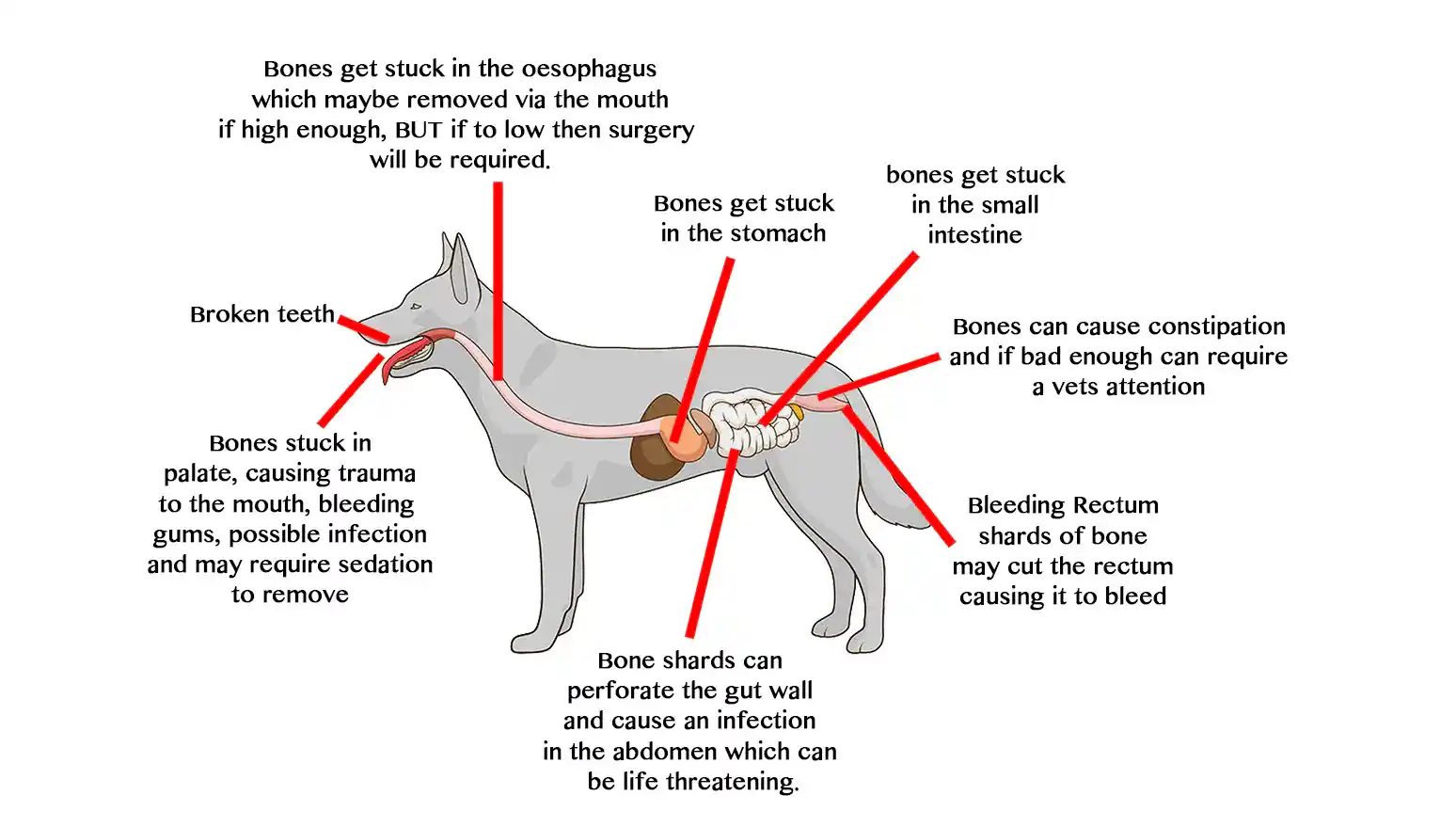
Let’s get clinical. Here is the mechanism of injury:
- Choking/Airway Obstruction: The bone gets stuck in the trachea. Oxygen cuts off. Brain death in 4 minutes.
- Esophageal Perforation: The bone gets stuck in the esophagus. It cuts through the wall. Air leaks into the chest cavity. Lung collapses.
- Gastric Perforation: The bone punctures the stomach. Acid leaks out. Chemical burn on internal organs.
- Intestinal Obstruction: The bone blocks the intestines. Nothing can pass. The gut backs up, swells, and dies.
- Constipation/Impaction: The bone chunks cement together with poop into a rock-hard blockage that cannot be passed. Requires enemas or surgery.
Choking Hazard From Rib Bones In Dogs?
Yes. High.
Rib bones are the perfect shape for choking. They are curved like a “C”. When a dog tries to swallow it, the curve can catch on the epiglottis (the flap that covers the windpipe).
Symptoms of Choking:
- Pawing at the mouth
- Gagging or retching without producing anything
- Blue or pale gums (lack of oxygen)
- Collapsing
What to do:
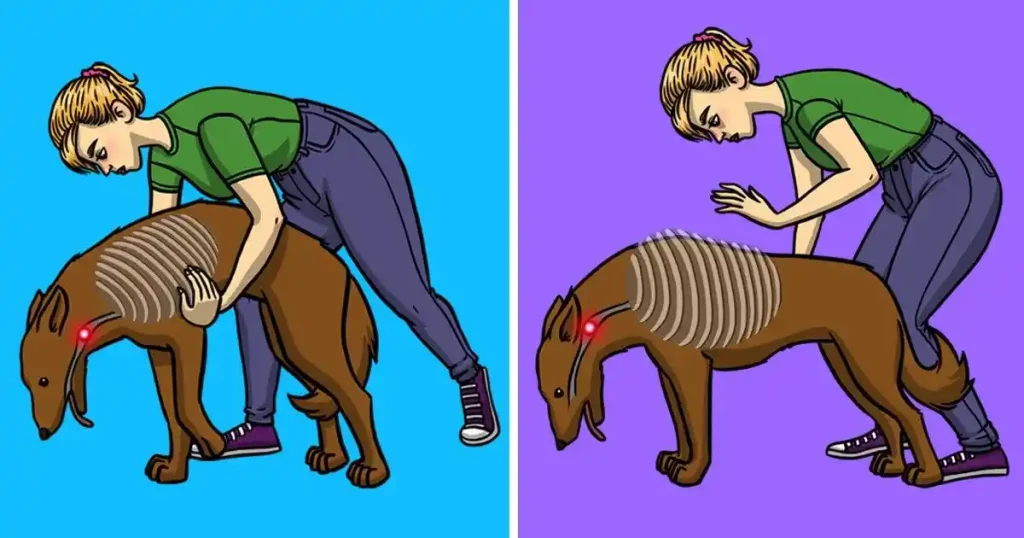
Do NOT sweep the mouth blindly. You might push the bone further down. If you can see it, pull it. If not, you need the Modified Heimlich Maneuver for Dogs.
For small dogs: Grab them by the thighs, turn them upside down, and shake sharply. Or compress the abdomen.
For large dogs: Get behind them, make a fist, place it under the ribcage, and push up and in.
But here is the truth: Prevention is the only cure. Once the bone is lodged, you have minutes. Call your vet while you are trying to dislodge it. Tell them you are coming in.
Shop Pet Accessories Trusted by Real Pet Owners Everywhere.
Safer alternatives To Rib Bones
I know. I know. You feel guilty. You want to give them something special. You can do that! You just have to be smart.
Here are veterinarian-approved alternatives that give the chewing satisfaction without the death sentence.
| If your dog likes… | Try this SAFE alternative | Why it’s safe |
|---|---|---|
| The CHEWING action | Nylabone or Benebone | Made of nylon/plastic. They wear down the teeth but don’t splinter. |
| The MEAT flavor | Dehydrated Bull Pizzle (Stick) | 100% digestible protein. High in glucosamine. |
| The GNAWING fun | Antlers (Shed) | Extremely hard, lasts months, no splintering. (Avoid if dog has weak teeth). |
| The PUZZLE aspect | Kong stuffed with Peanut Butter | Lasts 30+ mins. Mental stimulation. Safe. |
| The DENTAL clean | Greenies or Virbac CET Chews | Approved by VOHC (Veterinary Oral Health Council). |
Selling Point: Don’t risk a $5,000 surgery for a $0 bone. Invest $15 in a Nylabone or Antler that will last 6 months and keep your dog safe. Your wallet and your dog will thank you.
Frequently asked Questions about Can Dogs Have Rib Bones
Can Dogs Have Rib Bones If They are Raw?
Technically, yes, but we do not recommend it. Raw bones are less likely to splinter, but they carry a high risk of Salmonella/E. coli infection for both the dog and the humans in the house. They also carry a significant risk of cracking the dog’s molars (slab fractures). If you choose to give raw bones, you must supervise 100% of the time, take it away after 15-20 minutes, and practice strict hygiene. For 99% of owners, the risk is not worth the reward.
What are Safer alternatives To Rib Bones For Dogs?
The safest alternatives are synthetic chew toys (Nylabone), digestible chews (bully sticks, trachea chews), or dental chews approved by the VOHC (Greenies). Raw marrow bones from the butcher are “safer” than rib bones because they are round and less likely to splinter, but they are still very hard and can break teeth. The absolute safest bet is a toy that cannot be eaten.