
Can Dogs Eat Shrimp: Is Shrimp Bad Or Allergic For Dogs
Your dog just grabbed shrimp off your plate and you need answers now. Yes, dogs can eat shrimp safely when it’s plain, fully cooked, and completely shelled. However, raw shrimp, seasoned preparations, and shells create serious risks from bacterial infections to intestinal blockages. The difference between a safe treat and an emergency vet visit comes down entirely to preparation.
I’ll walk you through everything you need to know about feeding shrimp safely, including exact portions, warning signs, and when to skip it completely.


Key Takeaways
- Plain, fully cooked shrimp is safe for most healthy dogs in moderation
- Always remove shells, tails, and veins completely before serving
- Never feed raw shrimp due to Salmonella and parasite risks
- Start with one small piece to test for allergic reactions
- Small dogs should eat no more than 1-2 shrimp occasionally
- Watch for itching, vomiting, or swelling after first exposure
- Avoid all seasoned, fried, or breaded shrimp preparations
- Consult your veterinarian before feeding shrimp to dogs with health conditions
- One accidentally eaten plain shrimp rarely causes serious harm
Table of Contents
Can Dogs Eat Shrimp
Yes, dogs can eat shrimp when you follow proper safety guidelines. Shrimp provides a protein-rich, low-calorie treat that many dogs love. The critical factors are cooking method, preparation, and portion size.
Think of it this way: the shrimp itself is not harmful, but how you serve it determines safety. Plain steamed shrimp without shells falls into the safe zone. Garlic-butter shrimp from your dinner belongs in the danger zone.
Before offering shrimp, you must remove the shell, tail, legs, and digestive vein completely. These parts create choking hazards and can cause intestinal irritation. In practice, this means spending an extra minute on preparation to prevent problems.
| Shrimp Preparation | Safety Level | Action Required |
|---|---|---|
| Plain boiled or steamed | Safe | Remove shells, serve plain |
| Plain grilled without oil | Safe | Ensure no seasoning added |
| Raw shrimp | Unsafe | Cook thoroughly first |
| Fried or breaded | Unsafe | Never feed to dogs |
| Garlic or butter seasoned | Unsafe | Toxic ingredients present |
| Shells attached | Unsafe | Remove completely |
Veterinarian Consensus: According to veterinary nutritionists, plain cooked shrimp in moderation is considered an acceptable occasional treat for healthy adult dogs. The American Kennel Club confirms that shrimp can be beneficial when properly prepared.
Is Shrimp Safe For Dogs To Eat?
Shrimp is safe when served plain, fully cooked, and properly cleaned. Most healthy adult dogs digest small amounts without issues. However, individual tolerance varies significantly.
Smaller breeds have more sensitive digestive systems and need proportionally smaller portions. A Chihuahua should not eat the same amount as a Labrador. Similarly, dogs with existing conditions like pancreatitis may need to avoid shrimp entirely.
Here’s the thing: some dogs simply do not tolerate seafood well regardless of breed. A common mistake is assuming all dogs react the same way. When feeding shrimp for the first time, offer one small piece and monitor for 24 hours.
Breeds with higher food sensitivity rates: Bulldogs, German Shepherds, Retrievers, Boxers, and Cocker Spaniels may require extra caution with new proteins.


Does Shrimp Offer Health Benefits For Dogs?
Shrimp provides several nutritional benefits that can complement your dog’s regular diet. This seafood contains high-quality protein, essential vitamins, and beneficial minerals supporting overall health.
A single medium shrimp contains approximately 7 calories and 1.5 grams of protein with minimal fat. Shrimp also provides vitamin B12 for nerve function, phosphorus for bone health, and selenium for immune support.
However, shrimp should never replace balanced commercial dog food. The 90/10 rule applies: treats including shrimp should make up no more than 10 percent of daily caloric intake.
| Nutrient | Benefit For Dogs | Per Medium Shrimp |
|---|---|---|
| Protein | Muscle maintenance | 1.5 grams |
| Vitamin B12 | Nerve function support | 0.3 mcg |
| Phosphorus | Bone and teeth health | 33 mg |
| Selenium | Immune system support | 7 mcg |
| Omega-3s | Coat and skin health | Trace amounts |
Cost Comparison: One pound of raw shrimp costs approximately $8-12 and yields about 25 medium shrimp. High-quality commercial dog treats with similar protein content cost $15-25 per pound. Shrimp offers comparable nutrition at lower cost when you prepare it safely at home.
Is Shrimp Bad For Dogs?
Shrimp becomes problematic in specific circumstances. Understanding these situations helps you make informed decisions.
Cholesterol content presents one consideration. Shrimp contains higher cholesterol than other proteins. Occasional consumption rarely causes issues in healthy dogs, but those with heart conditions may need to avoid shellfish.
High-sodium preparations create serious concerns. Restaurant shrimp and cocktail shrimp contain salt levels exceeding safe amounts. Excessive sodium causes increased thirst, vomiting, and potentially sodium ion poisoning.
Overfeeding any rich protein upsets digestive balance. Even plain shrimp in excessive quantities triggers vomiting, diarrhea, or pancreatitis flare-ups.
What Are The Risks Of Feeding Shrimp To Dogs?
Several distinct risks require consideration before adding shrimp to your dog’s diet.
Bacterial contamination: Raw or undercooked shrimp may harbor Salmonella, Listeria, or Vibrio bacteria. These cause gastrointestinal illness with vomiting, diarrhea, fever, and lethargy.
Choking hazards: Shells and tails pose choking risks, especially for eager eaters. Small dogs face higher danger due to narrower airways.
Allergic reactions: Some dogs develop shellfish allergies causing skin itching, hives, facial swelling, or digestive upset.
Intestinal blockages: Shell fragments can create obstructions requiring emergency surgery.
Can Dogs Eat Cooked Shrimp?
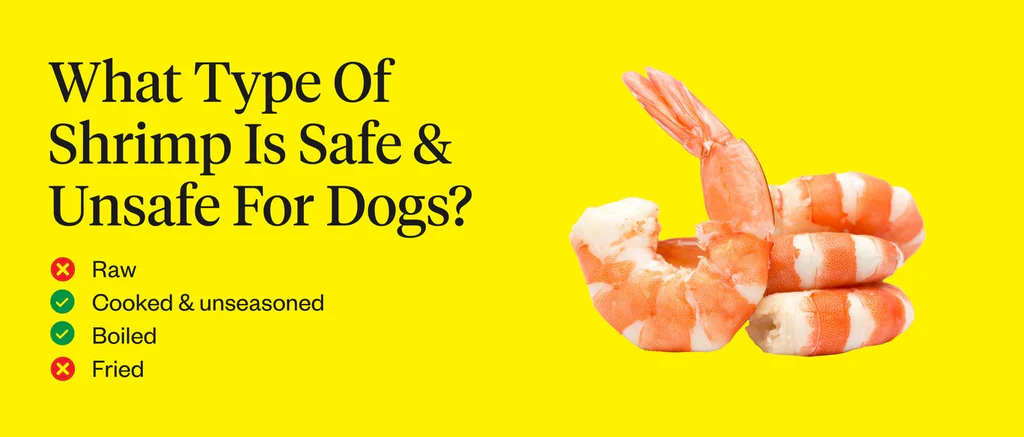
Fully cooked shrimp is the safest form for dogs. Cooking eliminates harmful bacteria and parasites while making protein easier to digest.
Safe cooking methods: Boiling, steaming, and plain grilling without oils or seasonings. Avoid frying, sautéing in butter, or adding flavorings.
After cooking, allow shrimp to cool completely. Remove all shell material including the tail tip. Cut larger shrimp into appropriate bite-sized pieces.
Portion guidance by dog size:
- Small dogs (under 20 lbs): 1-2 small shrimp maximum
- Medium dogs (20-50 lbs): 2-3 medium shrimp maximum
- Large dogs (50+ lbs): 3-4 shrimp maximum
Can Dogs Eat Raw Shrimp?
No, dogs should not eat raw shrimp. Raw seafood carries significant health risks that cooking eliminates.
Raw shrimp may contain Salmonella and Vibrio bacteria causing serious gastrointestinal illness. Symptoms typically appear within 12 to 72 hours and include severe vomiting, bloody diarrhea, fever, and dehydration.
Parasites present another danger. Various parasitic organisms survive in uncooked shellfish and establish infections causing long-term problems.
If your dog steals raw shrimp during preparation, do not panic but monitor closely. Contact your veterinarian if symptoms appear within 72 hours.
Can Dogs Eat Shrimp Shells?
No, dogs should never eat shrimp shells. Shells create multiple hazards ranging from uncomfortable to life-threatening.
The rigid material does not break down during digestion. Sharp edges can scratch or puncture the esophagus, stomach, or intestinal walls causing pain and inflammation.
Choking risk increases dramatically when shells remain attached. Dogs often swallow quickly without adequate chewing.
Intestinal blockages represent the most serious complication. Accumulated shell material creates obstructions requiring emergency surgery.
Always remove: Shell, tail, legs, and the dark digestive vein.


What Happens If A Dog Eats Shrimp?
Reactions vary widely depending on preparation, quantity, and individual factors. Most healthy dogs eating properly prepared shrimp experience no negative effects.
Mild digestive upset is the most common reaction when problems occur. This manifests as soft stool, minor vomiting, or temporary decreased appetite, usually resolving within 24 hours.
Allergic reactions appear differently. Watch for skin itching, hives, facial swelling, ear inflammation, or excessive paw licking developing within minutes to hours.
Will One Shrimp Hurt My Dog?
A single plain, cooked shrimp is unlikely to harm a healthy dog. This scenario causes owner panic but rarely warrants serious concern.
If your dog ate one plain cooked shrimp without seasoning or shell, simply monitor for 24 hours. Most dogs show no reaction.
If the shrimp contained garlic, onion, or excessive salt, closer monitoring is warranted. One shrimp worth typically does not reach toxic thresholds, but sensitive dogs may experience mild upset.
How Much Shrimp Can Dogs Eat?
Portion control prevents most problems. Even safe foods become problematic in excessive quantities.
The 10 percent rule provides guidance: treats should comprise no more than 10 percent of daily calories. For a 20-pound dog eating 400 calories daily, this equals roughly five to six medium shrimp maximum.
However, introduce gradually. Start with one small piece. If no reaction occurs within 24 hours, slowly increase to appropriate portions.
Frequency: Offer shrimp no more than once or twice weekly.

Can Dogs Be Allergic To Shrimp?
Yes, dogs can develop shellfish allergies. These occur when the immune system incorrectly identifies shrimp proteins as threats.
Common symptoms: Persistent scratching, skin redness, hives, ear infections, paw chewing, and digestive upset appearing within minutes to hours.
Allergy vs. intolerance: Intolerance causes digestive symptoms only. Allergies trigger immune responses that can escalate with repeated exposure.
When introducing shrimp, offer one tiny piece and observe 24-48 hours. Any allergic signs should prompt permanent shellfish avoidance.
Can Puppies Eat Shrimp?
Puppies require extra caution with new foods. Their developing digestive systems are more susceptible to upset from rich proteins.
Most veterinary professionals recommend waiting until 12 months old before introducing shellfish. During growth, consistent nutrition from balanced puppy food takes priority.
Consult your veterinarian before adding novel proteins to your puppy’s diet.
Can Dogs Eat Seafood?
Shrimp is not the only seafood option. Understanding comparisons helps you make informed choices.
| Seafood Type | Safety Level | Preparation Notes |
|---|---|---|
| Salmon (cooked) | Safe | Remove all bones, cook thoroughly |
| Sardines (canned) | Safe | Choose low-sodium, in water |
| Whitefish (cooked) | Safe | Boneless, plain preparation |
| Tuna (occasional) | Moderate | Limit due to mercury content |
| Shark, swordfish | Avoid | High mercury accumulation |
| Raw fish (any) | Avoid | Bacterial and parasite risks |
The ASPCA maintains comprehensive food safety guidelines for pets.
Shop Pet Accessories Trusted by Real Pet Owners Everywhere.



How To Safely Feed Your Dog Shrimp
Step 1: Source quality plain shrimp without added sodium or preservatives
Step 2: Cook thoroughly by boiling or steaming until pink and opaque
Step 3: Cool completely to room temperature
Step 4: Remove shell, tail, legs, and digestive vein completely
Step 5: Cut into appropriate bite-sized pieces
Step 6: Start with one small piece for first-time feeding
Step 7: Monitor for 24 hours before offering more
Simple Safe Shrimp Recipe:
Boil 4-5 plain shrimp in unsalted water for 3-4 minutes until pink. Cool completely. Remove all shells and veins. Cut into small pieces. Store refrigerated up to 3 days.
Frequently Asked Questions About Feeding Shrimp To Dogs
Can Dogs Eat Shrimp Without Getting Sick?
Most dogs eat properly prepared shrimp without illness. The keys are complete cooking, thorough shell removal, plain preparation, and appropriate portions. Dogs with allergies or sensitive stomachs may still react, so first-time introduction should always be gradual and monitored carefully.
Can Dogs Be Allergic To Shrimp And What Are The Signs?
Yes, shellfish allergies occur in dogs. Signs include skin itching, hives, facial swelling, ear inflammation, paw licking, vomiting, and diarrhea. Symptoms may appear within minutes or develop over hours. Severe reactions involving breathing difficulty require immediate emergency veterinary care. If you observe any allergic symptoms, avoid shellfish permanently and consult your veterinarian.